Manual & Structural
Manual Mobilization & Joint Manipulation
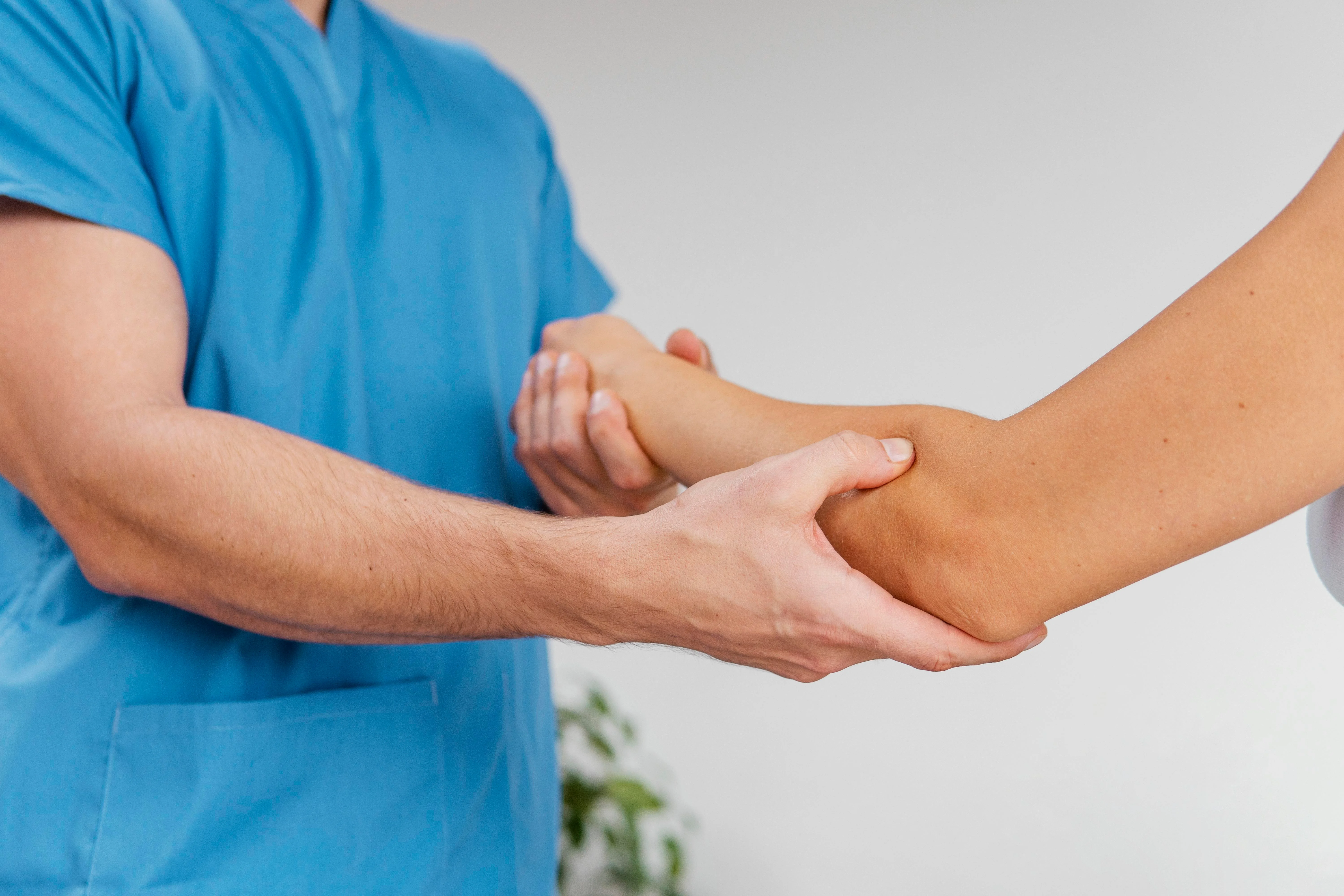
Two skilled hands-on techniques working in synergy — gentle mobilization to loosen stiff joints, precise manipulation to restore alignment — so you move with ease again.
- Session length
- 30–60 min
- Typical course
- 6–10 typical
- Intensity
- Moderate
- Suitable for
- Joint stiffness, frozen shoulder, restricted mobility
How it helps
- Loosens tight, stiff joints
- Increases circulation and joint nutrition
- Reduces pain and inflammation
- Restores range of motion — often instantly
- Corrects alignment and relieves nerve pressure
Often chosen for
Tap a condition to see the full condition guide.
What is Manual Mobilization?
When joint stiffness and pain limit your daily activities, targeted hands-on therapy can give you back your freedom of movement. Manual mobilization is the gentler half of this treatment: the therapist applies slow, controlled movements to joints within their normal range of motion. This loosens tight joints, increases circulation, reduces pain and inflammation, and improves joint nutrition and flexibility. It is especially well suited to people with stiffness, arthritis, or joints recovering from injury.
What is Joint Manipulation?
Joint manipulation is the more targeted technique. The therapist applies a quick, precise thrust to a joint — often producing the characteristic pop or crack. That controlled force realigns joint structures, releases trapped gases in the joint capsule, relieves pain by resetting nerve function, and can enhance range of motion instantly. Performed by a trained professional, it is safe and can bring rapid relief from joint dysfunction.
How the two work together
The techniques are designed as a sequence. Mobilization prepares the joint by gently increasing flexibility; manipulation follows to correct deeper restrictions and restore proper alignment. Together they enhance joint function, reduce muscular tension, and promote natural healing.
This synergy makes the treatment valuable for back, neck, and shoulder pain, joint stiffness and limited mobility, sports injuries and repetitive strain, arthritis and degenerative joint conditions, and postural imbalances that quietly wear joints down. If pain or restricted movement has been shaping your days, these treatments help you regain comfort — and move with confidence again.
What a session looks like
- 1
Joint and mobility assessment
The therapist maps which joints are stiff, painful, or restricted, and how that affects the way you move day to day.
- 2
Gentle mobilization
Slow, controlled movements within the joint's normal range loosen tight structures, increase circulation, and prepare the joint by gently building flexibility.
- 3
Precise manipulation
Where deeper restrictions remain, a quick, precise thrust — often with a characteristic pop — realigns the joint, releases trapped gases in the capsule, and resets nerve function.
- 4
Posture and home guidance
The session ends with supportive advice on posture, exercises, and lifestyle adjustments so the freedom you gained stays with you.
Manual Mobilization & Joint Manipulation — common questions
What is the difference between mobilization and manipulation?+−
Mobilization uses slow, controlled movements within a joint's normal range to loosen it gently. Manipulation is a quicker, targeted thrust that corrects deeper restrictions and restores alignment. In a session they work together — mobilization prepares, manipulation completes.
What is the popping sound?+−
The quick thrust of a manipulation releases gases trapped in the joint capsule, which makes the familiar pop or crack. It is harmless and often comes with an immediate sense of freer movement.
Is joint manipulation safe?+−
Yes — when performed by a trained professional it is safe and can bring rapid relief from joint dysfunction. Your therapist screens your history first and uses gentler mobilization wherever that is the better choice.
How long is a session and how will I feel afterwards?+−
Sessions last 30 to 60 minutes. Most people leave feeling lighter, more flexible, and energized, with stiffness noticeably reduced.
Related therapies
Manual & Structural
NAG SNAG Therapy
Gentle spinal mobilization using Natural Apophyseal Glides — precise, painless gliding movements that free stiff neck and back joints and restore natural movement.
Explore
Manual & Structural
Musculo-Skeletal Manipulation
Controlled, hands-on treatment of muscles, bones, and joints that realigns the body, releases tension, and restores easy movement.
Explore
Manual & Structural
Chiropractic
Gentle spinal and joint alignment that relieves pressure on nerves, eases pain, and restores posture — helping the body heal itself naturally.
ExploreExperience Manual Mobilization & Joint Manipulation at Thangajam Munril
Sessions are held at Thangajam Munril, our multidisciplinary centre in Dindigul, conducted by ALMAYA Coz Raja.