Manual & Structural
Manual Traction
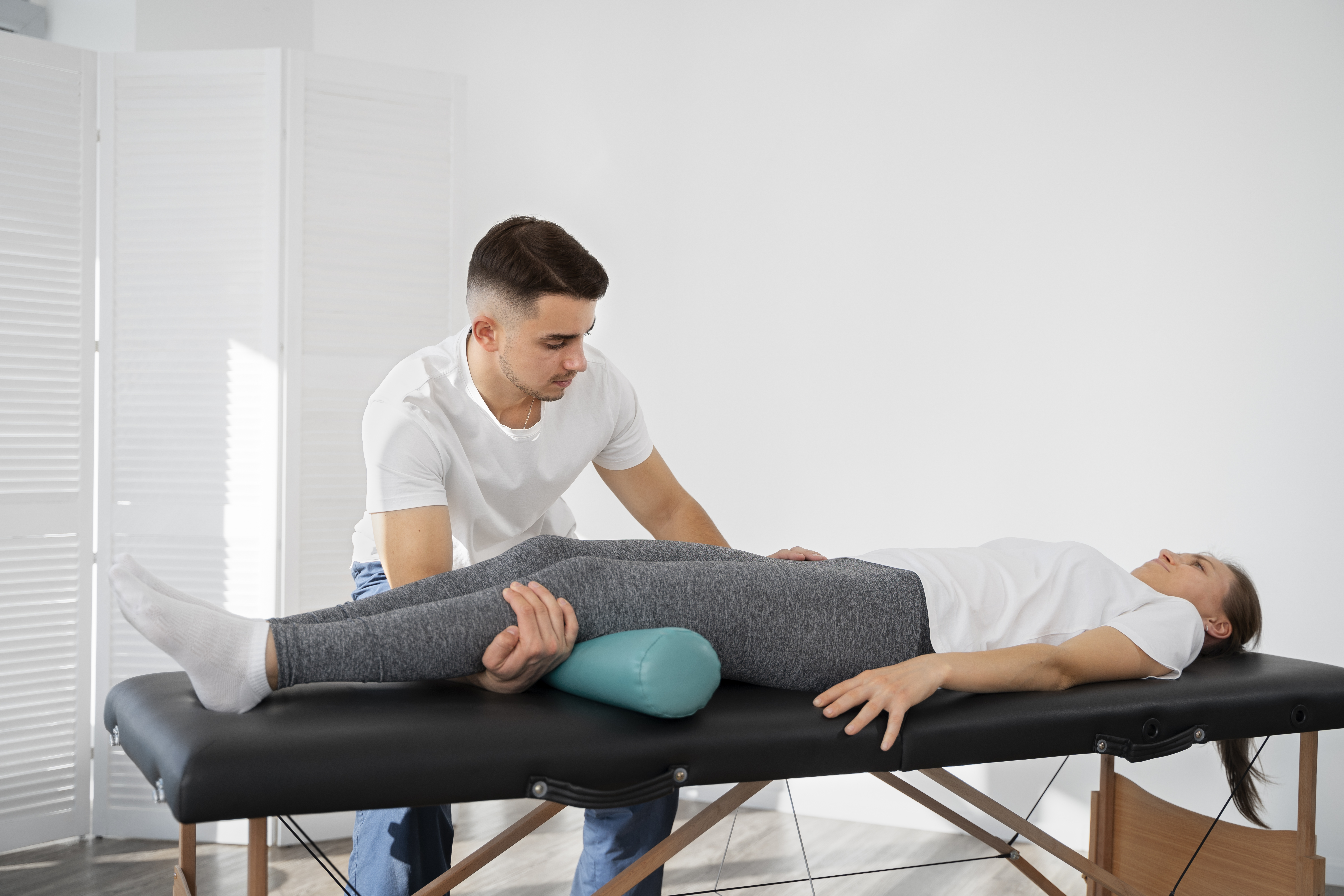
Manual Traction uses a therapist's controlled, hands-on pull to gently decompress the spine and joints, easing pressure on nerves and discs and bringing welcome relief to a stiff neck, aching back, or trapped-nerve pain.
- Session length
- 30–45 min
- Typical course
- 6–10 typical
- Intensity
- Gentle
- Suitable for
- People with neck or back stiffness, nerve-related pain, or joint compression who prefer a gentle, non-invasive approach
How it helps
- Relieves pressure on compressed spinal discs and nerves
- Eases neck, shoulder, and lower-back pain without medication
- Reduces radiating symptoms such as sciatica and arm or hand tingling
- Improves joint spacing and freedom of movement
- Relaxes guarding muscles around stiff, overloaded joints
Often chosen for
Tap a condition to see the full condition guide.
What is Manual Traction?
Manual Traction is a hands-on technique in which a therapist applies a slow, controlled pulling force along the spine or a limb, gently drawing the joint surfaces apart. Modern life compresses us — hours of sitting, screens, lifting, and gravity itself all press the vertebrae and joints together. When that compression irritates a disc or squeezes a nerve, the result can be neck pain, back stiffness, or pain that radiates down an arm or leg.
Traction simply reverses the direction: instead of more pressure, the joint gets space. Because the force comes from trained hands rather than a machine, every pull is matched to what your body can comfortably accept.
How it works
Creating a small gap within a compressed joint does several helpful things at once. Pressure eases off the discs and the nerves that pass between the vertebrae, which can quickly reduce radiating pain, tingling, or numbness. The stretch also lengthens tight muscles and ligaments around the joint, and the rhythmic pull-and-release encourages fresh circulation into tissue that compression had been starving. Just as importantly, the nervous system registers the treated area as safe again, so protective muscle guarding lets go.
What a session feels like
You lie comfortably while the therapist takes a secure, careful hold — cradling the head for neck traction, or the leg or pelvis for the lower back. The pull builds gradually, feels like a deep and satisfying stretch, and is held and released in slow cycles. There is no jerking or sudden movement. Most people describe a sensation of space opening up, and it is common to leave a session standing a little taller and turning the head more freely than when you arrived.
What a session looks like
- 1
Assessment and positioning
Your therapist checks how your spine and joints move, then positions you comfortably — usually lying down — so the target area can fully relax before any pull is applied.
- 2
Applying the gentle pull
With hands placed carefully above and below the restricted segment, the therapist applies a slow, steady stretching force, creating a small amount of space within the joint.
- 3
Holding and adjusting
The traction is held for several seconds at a time, then eased off. Because the pull is manual, the therapist feels your tissue respond moment to moment and fine-tunes the angle and strength continuously.
- 4
Release and re-check
The session finishes with gentle movement to re-check the joint. Many people feel an immediate sense of space and lightness in the treated area.
Manual Traction — common questions
How does pulling on the spine relieve pain?+−
A slow, controlled pull slightly separates the joint surfaces and vertebrae. This reduces pressure on discs and pinched nerves, improves circulation in the area, and lets guarding muscles finally relax — which is often felt as immediate relief.
Is manual traction the same as machine traction?+−
The principle is the same, but here the force comes from the therapist's hands. That means the pull is constantly adjusted to how your body responds — softer, more precise, and always within your comfort.
Will I feel relief after one session?+−
Many people notice looseness and reduced pain right away, especially in the neck. Longer-standing compression, such as chronic sciatica, usually improves gradually over a course of sessions combined with gentle exercise.
Related therapies
Manual & Structural
Chiropractic
Gentle spinal and joint alignment that relieves pressure on nerves, eases pain, and restores posture — helping the body heal itself naturally.
Explore
Manual & Structural
Manual Mobilization & Joint Manipulation
Two skilled hands-on techniques working in synergy — gentle mobilization to loosen stiff joints, precise manipulation to restore alignment — so you move with ease again.
Explore
Manual & Structural
The Dorn Method
The Dorn Method gently realigns the spine and joints using light thumb pressure applied while you move — a safe, force-free alternative to cracking-style adjustments, with simple exercises to keep the correction.
ExploreExperience Manual Traction at Thangajam Munril
Sessions are held at Thangajam Munril, our multidisciplinary centre in Dindigul, conducted by ALMAYA Coz Raja.